Cardiac arrest does not send a calendar invite. It occurs in a supermarket aisle, at a youngster's football game, or on your office flooring in between meetings. The survival contour drops quick, and by the time specialist -responders get here, early CPR from a spectator frequently makes the difference. That is why selecting a CPR course is not simply a box to tick for compliance. The ideal program builds confidence along with proficiency, and it aligns with your dangers, your office rules, and your resistance for time far from the job.
I have taught first aid and CPR for wellness solutions, construction firms, schools, and families for greater than a decade. The students that thrive can be found in with clear objectives and leave with a strategy to maintain skills fresh. This overview distills that experience right into useful purchasing standards, genuine compromises, and a couple of hard lessons learned.
Start with your "why"
Before comparing program catalogs and prices, specify what you require out of first aid and cpr training. An early youth educator, a physical fitness instructor, and a mine website supervisor deal with different realities. When the why is clear, the choice follows.
For numerous, the trigger is compliance. Employers have a task of care and commonly require a first aid certificate secured to certain standards. Sporting activity trains and lifeguards usually need a cpr refresher course every year. Aged treatment team and nurses require professional-level qualification straightened with current standards. Moms and dads and caretakers are less anxious regarding documentation and even more concentrated on being useful in the very first two minutes of a crisis.
Your First Aid Course Canberra why likewise forms the range. A standalone cpr course concentrates on compressions, breaths, and defibrillation. A first aid course includes hemorrhaging control, burns, fractures, allergies, and much more. First aid and cpr courses pack these elements so you can deal with one of the most typical emergencies while you await the ambulance.
Understand the main course types
Providers tend to team training in 3 tiers. The lingo adjustments between nations, however the structure is rather constant. If you strip away the advertising names, you often discover the same core web content under the hood.
Community CPR or Heartsaver design programs concentrate on adult resuscitation, basic respiratory tract monitoring, and automated external defibrillators. They match work environments with reduced to modest threat, college staff, and the public. Duration runs 2 to 4 hours if combined with online concept, or up to half a day in-person.
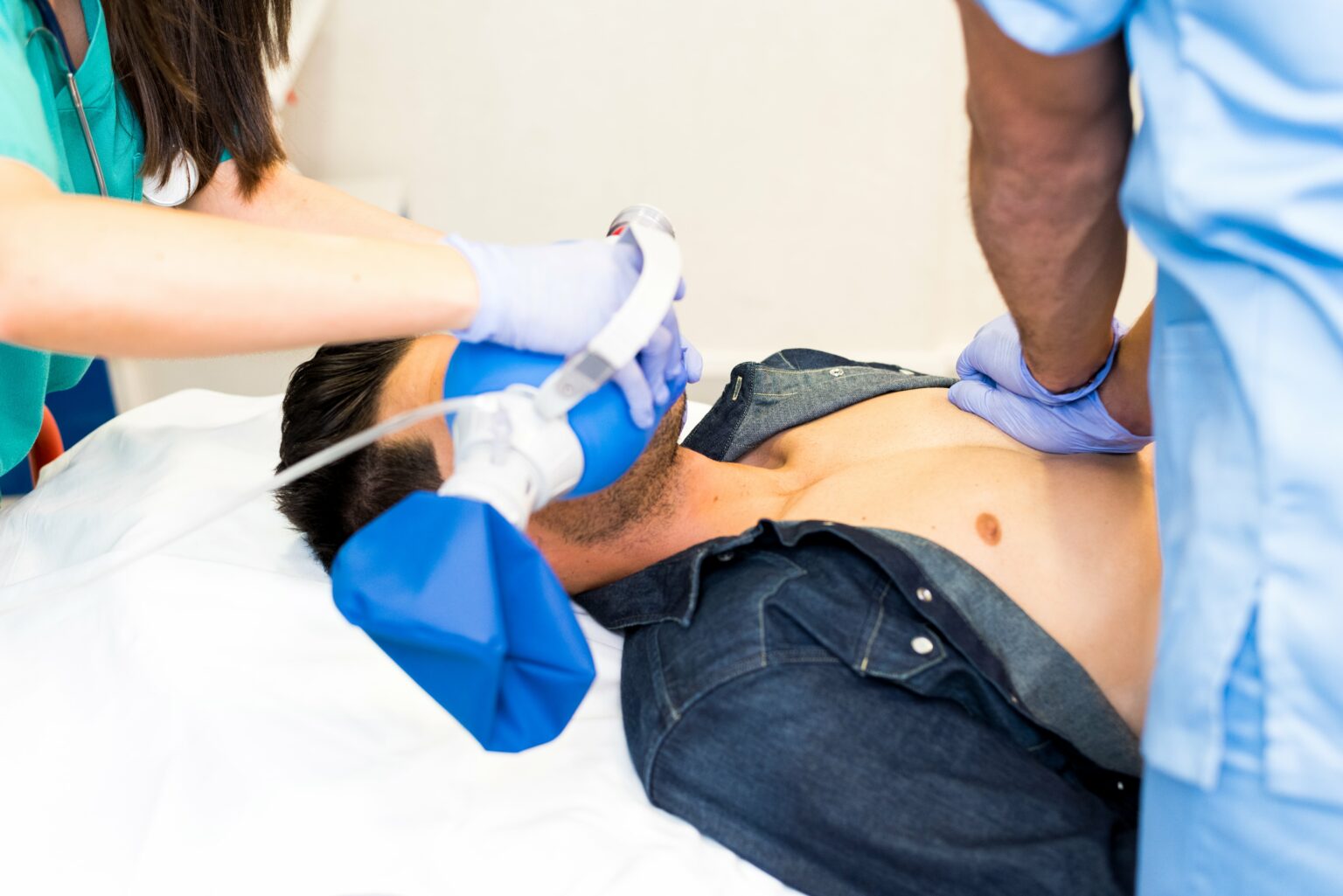
Professional rescuer or Fundamental Life Assistance courses raise bench. Anticipate two-rescuer techniques, bag-valve-mask usage, oxygen recognition, and infant and youngster components by default. Healthcare facilities, dental clinics, and ambulance volunteers lean on this tier. Time commitment ranges from 3 to 5 hours for an upgrade to a full day for first-timers, specifically when evaluation criteria are strict.
Comprehensive first aid and cpr course packages add injury treatment. You practice injury packaging, tourniquets, splinting, anaphylaxis administration with auto-injectors, and administration of shock. This is the level most construction, production, hospitality, and education workplaces call for. Prepare for a complete day, sometimes with a brief online pre-learning module.
A pediatric cpr course should have a special reference. Infants and children are not tiny adults. The respiratory tract is various, compression deepness modifications, and choking monitoring has its own steps. If you look after kids under eight, focus on a pediatric lens or ensure your picked first aid and cpr training explicitly consists of youngster and baby content.
Look for identified guidelines and accreditation
Certification just matters if the people that examine your credentials accept it. That normally implies positioning with an authoritative guideline body and a supplier with identified accreditation.
In several areas, the gold requirements originate from nationwide resuscitation councils which update algorithms every five years or quicker if solid brand-new proof arises. Credible service providers refresh their cpr courses promptly after updates. If the trial videos still reveal out-of-date compression-to-ventilation ratios or pre-2015 sequences, maintain walking.
Accreditation surpasses content. It covers analysis quality, instructor qualifications, and record-keeping. Healthcare facilities, regulatory firms, and significant employers will normally define which certification footprints they accept. If you are not sure, ask your HR or conformity lead for the specific training codes or course IDs they identify, after that match those to the company's listing. A trusted first aid pro will put the certification information in simple view, not behind a contact form.
Skills first, slides second
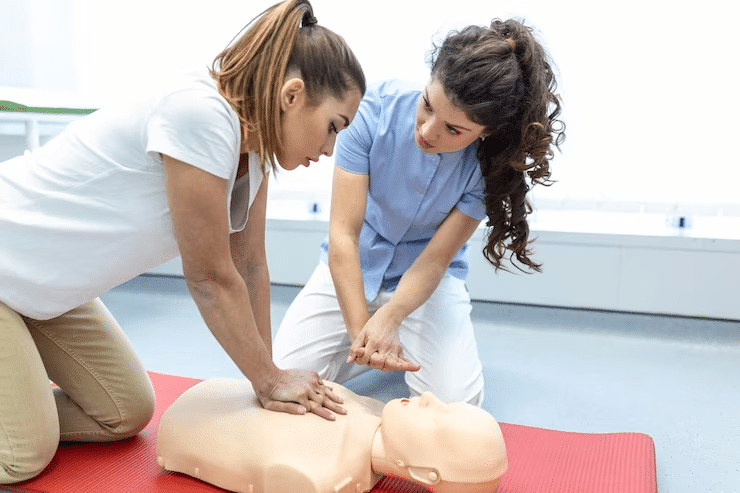
The point of cpr training is to develop muscular tissue memory under anxiety. That does not happen in a lecture. You require hands-on time with a responses mannequin that informs you whether your compression depth and rate are in the wonderful spot. Search for training courses that assure ample technique time per trainee. As a rule of thumb, aim for a minimum of 10 to 15 minutes of focused compressions per person throughout several cycles, with real-time responses on deepness, recoil, and rate.

Good courses keep instructor-to-learner proportions reduced. When I go beyond 10 learners per teacher for CPR, the quiet individuals conceal in the back row and the nervous ones do not ask for help. Smaller sized groups suggest you can fix hand setting, arm lock, and body auto mechanics so you do not stress out midway via a two-minute cycle.
Quality training likewise imitates context. Switching on the AED while you are currently mid-compressions, switching rescuers on the matter, switching from adult to child setups, and taking care of a congested scene are abilities that stick much better when you exercise them, not just find out about them. If you do not see method scenarios on the course summary, ask.
What hybrid and online layouts can and can not do
Blended knowing has grown. On the internet modules handle theory well. You can absorb the chain of survival, scene security, and recognition of cardiac arrest at your own speed. That time financial savings matters if your team is managing lineups. However the hands-on part is non-negotiable for legitimate qualification. Enjoying a video will not educate your body how to push via breast recoil or count out loud while breathing for a child.
When comparing combined options, inspect 2 details. Initially, for how long is the in-person abilities session, and what is the maximum class dimension. A one-hour check-off for a first aid and cpr course rarely provides actual proficiency. Second, confirm the validity of the certification in your field. Some regulators accept a hybrid version for cpr courses yet demand totally in-person analysis for first aid training that covers risky topics like tourniquets or oxygen.
Purely online CPR certificates might be great for personal knowledge, but they are commonly declined by companies and insurance companies. If a supplier promises a first aid certificate with no in-person need, checked out the fine print twice and ask your conformity police officer prior to you pay.
AED training is not optional anymore
There was a time when an AED felt like a luxury. Currently they are in airports, health clubs, institutions, and even larger apartment buildings. An AED in the cabinet is not a strategy unless people understand just how to utilize it under pressure.
Make sure the cpr course you pick includes hands-on AED practice with fitness instructor systems. You wish to exercise powering on, adhering to triggers, using pads to a bare breast, getting rid of the individual prior to a shock, and resuming compressions without delay. If your website has a specific AED design, ask the carrier to bring a compatible instructor. The core actions coincide, however pad positioning layouts and triggers vary sufficient that experience helps.
Choosing in between carriers: what really matters
The best advertising and marketing assures discolor quickly when the course starts late, the mannequins are damaged, and the certification shows up 6 weeks later. Concentrate on operational reliability. Providers who run thousands of sessions a year find out to sweat the small things that matter on your side too.
Start by reviewing recent reviews that state certain information, not generic praise. "Trainer fixed my hand setting and my price enhanced from 80 to 110 per minute" is extra purposeful than "fantastic class." Examine the cancellation and rescheduling plan in case your team's shifts transform. Inquire about language assistance if your staff have diverse backgrounds. Verify that your individuals will in fact obtain a first aid certificate or cpr certificate quickly, ideally within 24 to 72 hours.
Equipment quality is an inform. Feedback mannequins with visual indicators or digital readouts drive much better performance than older foam blocks. For first aid training, inquire about the supplies you will certainly use. Exercising with real tourniquets, correct epinephrine fitness instructors, and modern injury packing materials aids the lessons stick. If the kit contains a few plasters and duct tape, you will not get contemporary blood loss control skills.
Finally, take into consideration whether the service provider supplies on-site training. Bringing an instructor to your workplace raises realism and gets rid of travel friction. I have actually shown CPR in break rooms, storage facilities, and school halls. Practicing on the flooring where the emergency would actually take first aid course Albany area place adjustments the energy for the better.
Special instances where training course selection truly matters
Not every learner fits the standard pattern. A few First Aid Training Rockhampton situations require mindful option and occasionally a custom session.
If your group consists of individuals with pre-existing back, shoulder, or wrist injuries, pick a course that permits adaptive strategies and constant switches in between rescuers. Quality teachers will instructor body technicians that decrease strain and recommend functions for those that can not carry out compressions, such as AED procedure, timekeeping, and emergency solutions liaison.
For remote and high-risk worksites, a simple cpr course is inadequate. Choose a thorough first aid and cpr course that includes remote action preparation, hypothermia monitoring, environmental risks, and prolonged treatment. In these settings, you might be the initial and just assist for an hour or even more. That requires a different way of thinking and more kit.
If you look after infants and toddlers, ensure choking methods and infant compressions are exercised repeatedly. The muscle memory for 2 fingers on a small breast bone and the rhythm for 5 back puts adhered to by upper body drives does not come naturally to grownups. An excellent pediatric component will also deal with fever seizures, allergic reactions, and sinking action with a focus on mild airway management.
In oral and outpatient clinics, look for BLS training courses that consist of team duties, oxygen delivery, and bag-valve-mask ventilation. A passing out episode in a waiting room may develop into a complete arrest, and your reaction will certainly be evaluated by specialist standards.
How frequently to freshen skills
Skills fade. Study after study reveals that CPR efficiency decomposes within months, not years. A lot of certificates run for two or 3 years for first aid courses and one year for professional-level BLS. If your work environment risk is modest to high, prepare a cpr correspondence course every twelve month, even if your official certificate lasts longer.
Make refreshers brief and focused. 2 hours focusing on compressions, AED operations, kid and infant distinctions, and a couple of genuine scenarios will do even more for efficiency than rewatching a complete theory deck. In between refreshers, post a fast referral near your AED, run a five-minute drill at a personnel conference, and revolve who retrieves the AED during fire drills.
What a fair rate looks like
Pricing differs by area, course dimension, and style. In most cities, anticipate a public cpr course to set you back the cost of a nice supper. First aid and cpr courses are usually greater as a result of the longer duration and products utilized during training. On-site team prices typically drop the per-person cost by 10 to 30 percent, especially if you can fill up a course. If you see a low cost, ask why. Service providers who undercut the market commonly run jampacked sessions or skimp on devices and trainer pay, which drives down quality.
When budgeting, consider staff time away from work and the value of faster qualification turn-around. A provider who supplies certificates the very same day, timetables around your shift adjustment, and brings all gear on-site will typically save you greater than the small distinction in training course fee.
Red flags that suggest you ought to maintain looking
Choosing a service provider is component due persistance and part digestive tract really feel. For many years I have learned to walk away from specific patterns. Treat these as warning signs and promote better.
- Vague accreditation cases or missing course codes on the website. No in-person skills analysis provided, yet the supplier guarantees global acceptance. Overcrowded classes where learners share a solitary mannequin without appropriate sanitation or feedback. Instructors who read slides verbatim and reduced circumstances to "save time." Certificates that show up gradually or do not have key information such as program degree, day, and one-of-a-kind learner ID.
What to expect on training day
Plan in advance so the time you invest in course day pays off. Wear garments that let you kneel, lean, and sweat a little. Bring a water bottle, and if kneeling on hard floorings is difficult for you, load a tiny towel or knee pad. Anticipate to practice compressions several times, revolving roles in a mock emergency. You will likely operate in pairs or tiny groups and listen to a metronome or songs track to aid with compression rate. In a first aid course, you will additionally use gloves, triangular bandages, splints, and occasionally training auto-injectors. Do not be timid. The more you practice, the more your brain will certainly comply when adrenaline floods your system throughout the genuine thing.
A good trainer will fix you in the minute, not after you end up a two-minute collection. They will certainly also develop a tranquil atmosphere. People stress over "breaking ribs." The truth is that correct compressions frequently split cartilage material. That is not failure. Quiting early is. Your objective is to push hard and fast at the proper depth and enable complete recoil so the heart refills between compressions.
Building a program for teams
For employers, a solitary program is a begin, not a system. Map your operations and choose the number of qualified individuals you need per shift and per area. Go for overlap so health problem and leave do not leave you exposed. Assign a custodian for every AED, consisting of month-to-month checks of pad expiry and battery status. Work with your first aid pro to catch training information, certification expirations, and reminders. It is a lot easier to arrange tiny, regular cpr training obstructs than to change a loads ran out certifications at once.
Culture matters as well. Normalize quick debriefs after near misses out on. If a person had to call a rescue for a fainting episode, use that experience to refine your action circulation. Post the emergency situation number and your exact area near every phone and in your team application. The fastest means to hone a group is to exercise the first sixty seconds up until it is boring.
How to compare shortlists without obtaining lost
It is very easy to drown in similar-sounding options. When you narrow down to two or three providers, run an easy, side-by-side check that goes beyond price.
- Does the program match your threat profile and regulatory requirements, with the appropriate first aid and cpr course codes listed? How much hands-on time and mannequin-to-learner ratio do they devote to, and do they make use of feedback-enabled equipment? What is the plan for AED practice, pediatric web content if required, and reasonable scenarios linked to your environment? How quickly will you obtain a first aid certificate or cpr certificate, and in what format? What do current, specific evaluations say about teacher high quality, preparation, and post-course support?
If two choices still look equal, phone each provider and ask a concrete concern. As an example, "Our site has a ZOLL AED 3. Can you bring a compatible fitness instructor and pads for method?" The clearness and rate of the answer typically tells you which team will certainly show up prepared.
A note on post-event support
Many students do whatever right in training yet freeze the first time a genuine arrest occurs. That is regular. If you or your team end up performing CPR, plan for a debrief with somebody who understands both the scientific and human sides. Good service providers use post-event support, from going through what happened to aiding you refresh any steps that really felt unstable. Early, thoughtful debriefing decreases the anxiety hangover and seals the lessons.
Where a brief, concentrated refresher course shines
Not every session requires to be long. I run 60 to 90 min cpr refresher courses for teams that educate routinely. We begin with a quick evaluation of recognition indications, after that leap directly into timed situations. We exercise two rescuer rotations, AED use with simulated pad misplacement, and a child scenario with choking that advances to unresponsiveness. By the end, every person has done at least 2 complete cycles and got feedback on price and depth. These short bursts maintain performance high without exploding the roster.
If your budget plan or routine is limited, consider this rhythm. Full first aid and cpr training every two or three years as needed, then yearly CPR refreshers, and quarterly micro-drills that take ten mins. Post the metronome rate you want, generally around 100 to 120 compressions per minute, and make it a team difficulty to strike the target consistently.
Common myths to leave behind
A few mistaken beliefs still float around first aid courses and cpr training. Clearing up them now will certainly assist you examine service providers and method correctly.
People fear they may hurt someone by starting CPR if they are not sure. The risk of harm from excellent confidence compressions on a less competent, non-breathing individual is much less than the danger of not acting. Top quality training will teach you basic checks to determine when to start.
Mouth-to-mouth breathing often causes anxiousness. In grown-up cardiac arrest of heart beginning, compressions-only CPR is effective up until an AED gets here or advanced aid takes control of. That claimed, for kids and drowning instances, adding breaths boosts survival. Pick a program that teaches both techniques so you can adapt to the situation and your convenience level, and find out to make use of obstacle devices.
Another myth is that AEDs are made complex or harmful to rescuers. Modern AEDs train you through the process and analyze rhythm prior to encouraging a shock. You can not shock yourself if you adhere to the motivates. Experimenting a fitness instructor AED gets rid of the worry quickly.
Finally, some believe a certificate guarantees efficiency. It does not. Performance originates from method, responses, and prompt refreshers. Treat the first aid certificate as a turning point, not the surface line.
The base line
If you remove the decision to its basics, you are selecting in between classes that look comparable on paper but really feel extremely different in practice. Focus on acknowledged certification, significant hands-on time with feedback tools, realistic AED technique, and instructors who trainer rather than lecture. Suit the training course scope to your dangers, and established a tempo for refreshers that maintains abilities to life. Whether you are a parent registering for a Saturday early morning cpr course, a safety supervisor reserving first aid and cpr courses for four sites, or a clinician maintaining BLS, the right training must leave you calmer, faster, and more capable when secs matter.
Choose well, after that exercise up until your hands understand what to do prior to your head captures up. That is the purchase that pays off.